






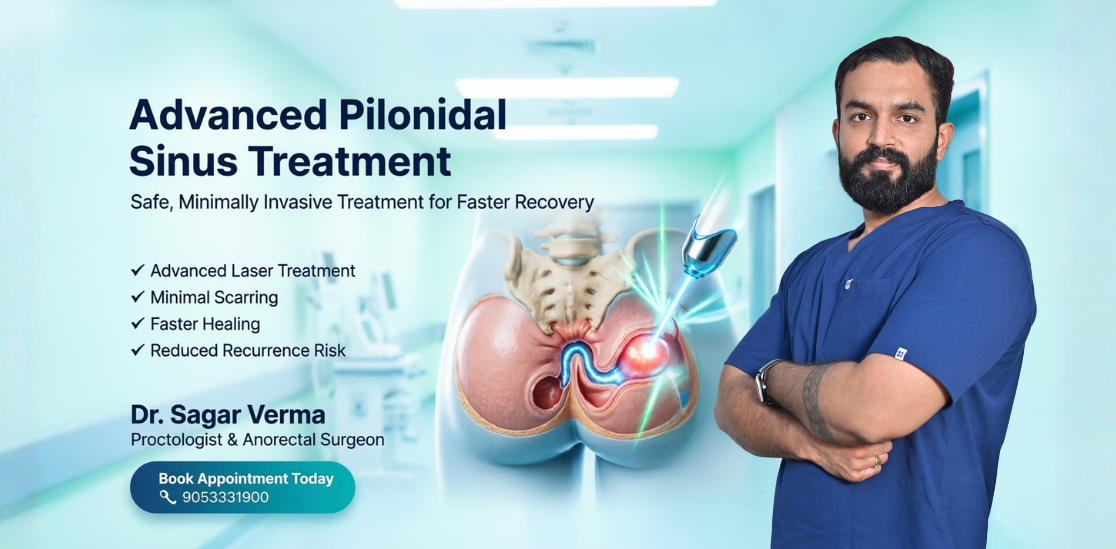
Pilonidal sinus is a painful condition that develops near the tailbone or upper buttock region due to infection, trapped hair, and accumulation of dead skin cells. It usually appears as a small cyst, swelling, or tunnel under the skin that may cause severe pain, redness, pus discharge, and discomfort while sitting or walking. If not treated properly, the infection can become chronic and lead to repeated abscess formation.
Pilonidal sinus commonly affects young adults and people who sit for long hours, have excessive body hair, obesity, poor hygiene, or repeated friction near the tailbone area. The condition may initially start as mild swelling or irritation but can gradually worsen into a painful infected sinus with pus drainage and foul smell. Many patients ignore early symptoms, which increases infection risk and complications over time.
Laser energy precisely targets and removes the infected sinus tract while preserving healthy tissue.
Minimal pain, no large incisions, and same-day discharge. Return to work in just 2-3 days.
Laser treatment significantly reduces the chance of recurrence compared to traditional open surgery.
We perform a thorough physical examination and imaging to map the sinus tract and plan the laser procedure.
A laser fiber is inserted into the sinus tract. The laser energy destroys infected tissue and seals the cavity.
The laser is precise and minimally invasive, preserving surrounding healthy skin and muscle tissue.
No large incisions, minimal bleeding, and same-day discharge. Most patients resume normal activities within 3 days.
Success Rate
Less Pain
Same-Day Discharge
Laser treatment offers a significantly higher success rate with less pain, faster healing, and a much lower recurrence rate compared to traditional open surgery.
Laser Sinus Ablation
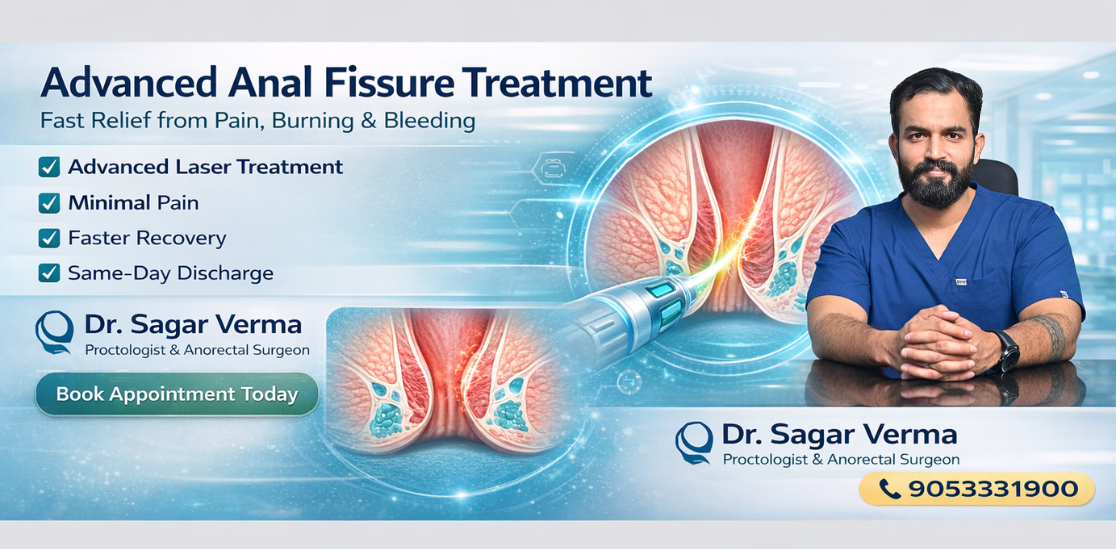
Expert Consultation
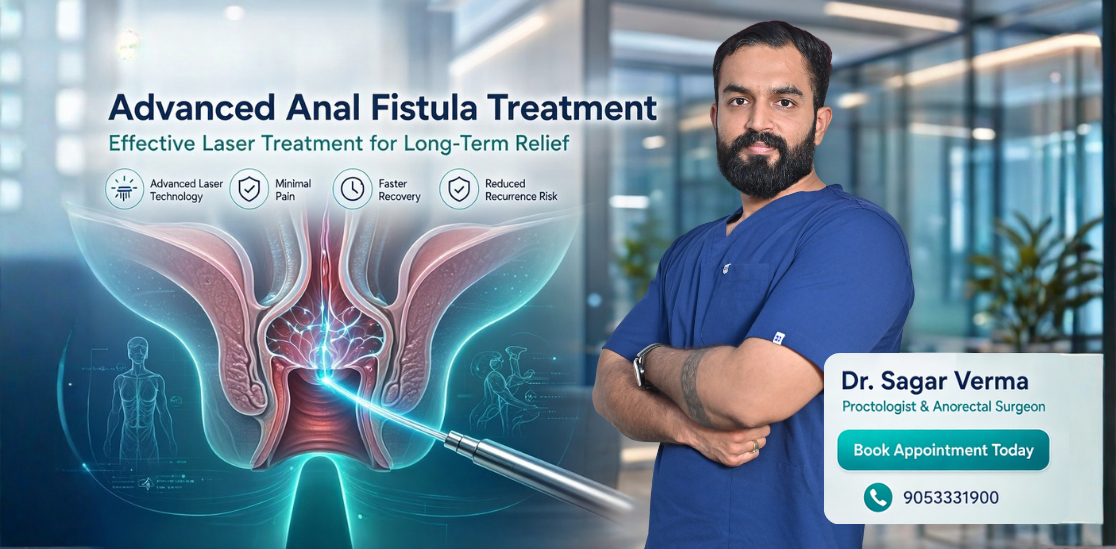
Quick Recovery
"I had been suffering from pilonidal sinus for over a year with recurring abscesses. Dr. Verma's laser treatment was a game-changer. The procedure was painless, and I was back to my routine in just 3 days. I haven't had any recurrence since."
— Amit K., Panipat